Brick, Mortar, and Button Mashing: Why Gamers Are Leaving the Basement for the Bar

Photo: Activision, Public domain, via Wikimedia Commons
There's a particular sound you notice the moment you walk into a gaming bar that's working. Not the clang of pinball — though that's usually there — but the murmur of people talking about the game to someone standing next to them. Not over Discord. Not in a party chat. In person. Out loud. To a stranger.
For a generation raised on headsets and matchmaking, that sound is quietly revolutionary. And across the United States, more venues are figuring out how to make it.
The Death and Resurrection of the Arcade
Ask anyone over forty about gaming in public and they'll start describing a strip mall: sticky carpet, a change cup, a Street Fighter II cabinet with a worn-out joystick. The arcades of the '80s and '90s were America's original third places for gamers — neither home nor school, but a space where you belonged simply by showing up with quarters.
Then consoles got good, and the arcades died. Or seemed to.
What's risen in their place is something different. Walk into a modern esports lounge in Austin or a retro barcade in Portland and you'll find craft beer where the token machine used to be, tournament streams on wall-mounted TVs where the prize counter stood, and a crowd that skews older than the arcade rats of yesteryear. These aren't museums to nostalgia. They're businesses built on a bet that gamers want to be around each other.
The bet is paying off. Barcades have become one of the more reliable concepts in the hospitality industry, and dedicated esports venues — some backed by franchise chains, some scrappy independents — have opened in suburbs and college towns, not just coastal metros.
Why Now? Blame the Loneliness
The obvious explanation is nostalgia, but nostalgia doesn't explain a twenty-five-year-old who never set foot in a real arcade spending every Friday at one.
The better explanation is exhaustion. Gamers spent three years of pandemic isolation perfecting the at-home setup — the ergonomic chair, the dual monitors, the mini fridge — and then discovered that a perfect fortress with one person in it is just a really comfortable cell. The Surgeon General's advisory on loneliness hit Americans across the board, and gamers arguably had the furthest to travel back toward in-person community.
Third places — that sociologist's term for the spaces that aren't work and aren't home — have been collapsing nationwide. Malls are hollowed out. Churches draw fewer people. Bowling leagues are a punchline. Gaming venues are stepping into that vacuum with something most third places can't offer: a built-in common language. Two strangers who've never met can argue about a meta, or a patch, or whether Melee is still the best fighting game ever made, and suddenly they're not strangers.
The Economics of the Lobby
Here's the part the romantic versions leave out: these places live or die on sharp business decisions.
Alcohol carries the margin; games carry the traffic. That's the basic formula. The retro cabinets and PC rigs don't need to turn a profit — they need to keep people in seats for two extra hours. Smart operators treat hardware as ambiance, not revenue. Others run on a tournament model: entry fees, sponsorships, a weekly bracket that turns casuals into regulars.
The venues that struggle tend to be the ones that over-invest in the wrong thing — thirty top-spec gaming rigs nobody's using because the space feels like a call center. The ones that thrive understand they're selling belonging with games attached.
There's also a local angle that matters. When a city lands an esports lounge, it's not just getting a business; it's getting a venue where high school teams practice, where small tournaments feed bigger ones, where a kid who's the only Super Smash Bros. player in their friend group finds forty of them.
The Fortress Extends Outward
At VG Fort, we spend a lot of time thinking about what a fortress is. For two decades the answer was a basement: a locked door, a good chair, a connection you could trust. The fortress was defensive — built against a world that didn't get it.
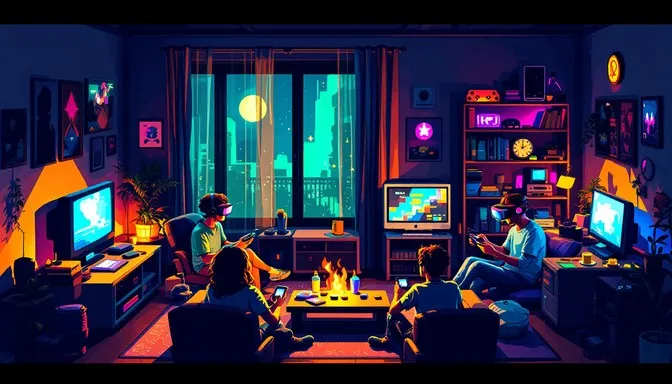
What's happening in gaming bars and lounges is the fortress opening its gates. Not abandoning the walls, exactly, but deciding the keep is better with a crowd in the courtyard. The mentality is the same — this is our space, built for our people — but the drawbridge is down.
That shift didn't come from the industry. No publisher marketed gamers into bars. It came from players who realized that the thing they loved about gaming was never really the screen. It was the people on the other side of it.
Go Find Yours
If there's one within driving distance, spend a Friday night at a gaming venue near you. Lose a Mario Kart race to someone's girlfriend who's never played. Watch a stranger teach a twelve-year-old how to parry. Buy the round.
The internet made it possible to game with anyone on Earth. It turns out a lot of us would rather do it with someone in the room.