No Man's Land No More: How Discord Quietly Became the Gamer Living Room
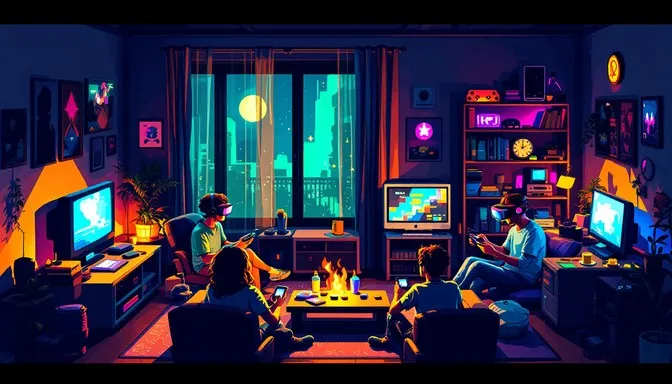
Photo: friends gaming together on computers in cozy living room at night, via images.stockcake.com
Think about where your gaming friendships actually live. Not the matches themselves — those are just visits. The real relationship lives somewhere else: a server you joined in 2019, with a channel called #food-crimes, a bot that greets you by name, and a mod who has never once played the game you all bonded over.
That place is the modern gamer living room. And it didn't happen by accident.
The Lobby Was Never Home
For decades, gaming social life was improvised. We shouted over in-game voice chat into a void of twelve-year-olds and open mics. We posted on forums that felt like public squares — everyone talking, no one listening. Xbox party chat helped, but it was a phone call, not a place.
Discord changed the architecture. Instead of dropping into a space that belonged to a game or a publisher, players started building rooms that belonged to them. A server isn't a feature of a game. It's a clubhouse with a custom floor plan.
Every Server Is a Little Fortress
Here's the thing that makes Discord servers fascinating from a culture standpoint: they replicate, almost instinctively, the structure of a medieval keep.
The gate. A verification step, a rules channel, sometimes an interview. You don't just wander in — you're admitted.
The roles. These are the coats of arms of the digital age. @Veteran, @Raider, @Certified Menace. Roles signal history and standing. Regulars can spot a newcomer's default gray name instantly, and that shapes how they're treated.
The rituals. Friday night game nights. A pinned meme of the week. The annual argument about whether pineapple belongs on pizza, re-litigated like a town charter.
The inner keep. Every established server has channels that only make sense to insiders — the #inside-jokes archive, the voice channel where three people silently co-work at 2 a.m. Outsiders see a channel list. Members see a map of home.
Why We Moved Out of the Game
The shift happened for a simple reason: in-game social features are built for the publisher's benefit, not the player's. Matchmaking chat disappears when the match ends. Forums get shut down when a company rebrands. Live service games sunset, and with them, the communities that grew around them.
Discord servers survive the games themselves. When a title dies, the server pivots — first to the sequel, then to whatever everyone's playing that month, then to just... hanging out. Plenty of servers today are named after a game nobody has launched in two years. That's not failure. That's proof the game was just the housewarming party.
There's also a privacy angle that matters to a lot of American players. After years of platforms harvesting data and companies moderating (or refusing to moderate) public spaces, a private server with known mods and known people feels like property. You can lock the door. You can kick out the guy being awful. Try doing that in a public lobby.
The Trade-Offs Nobody Mentions
It's not all warm hearth fire. The fortress model has costs.
Discovery is harder. You can't stumble into someone's Discord the way you could wander into a forum thread. Servers grow by invitation, which means your social circle can calcify around who you already know.
Moderation is unpaid labor. Every good server is held up by mods doing emotional janitorial work for free, and burnout is rampant. When a beloved mod quits, servers genuinely grieve.
And fragmentation is real. Between Discord, group chats, guild forums, and in-game clans, your community might be spread across four apps. Some nights it's easier to just play solo than to figure out which room everyone's in.
What Comes After the Living Room
Discord's own corporate wanderings — the abandoned merger talks, the pivot toward monetization — have a lot of people eyeing the exits. Matrix-based apps, Guilded, self-hosted options, and good old group chats are all circling.
But here's the thing: whatever platform wins next, the blueprint is set. Players want persistent, player-owned social spaces with their own gates, roles, and rituals. The industry spent twenty years building lobbies. Gamers built living rooms instead — and they're not moving back into the lobby for anybody.
If your server has a channel nobody else would understand, congratulations. You've built a fort. Defend it well.