Smaller Is the New Bigger: Why Smart Streamers Are Trading Viral Chasing for Private Communities
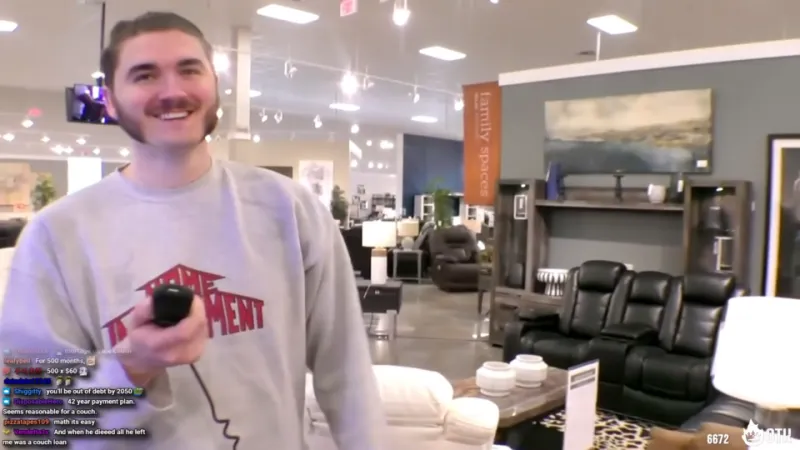
Photo: Esfand, CC BY 3.0, via Wikimedia Commons
For years, the dream was simple: go live, grind for viewers, and eventually blow up. Get featured, get clipped, get viral. The platform gods would smile upon you, the algorithm would carry you, and somewhere down the road you'd be pulling six figures talking about video games for a living. It was the creator economy's version of the American Dream — and for a very small number of people, it actually worked.
For everyone else? It was a treadmill with no off switch.
Now, a noticeable shift is happening across the streaming landscape. Mid-tier creators — the folks pulling anywhere from a few hundred to a few thousand regular viewers — are quietly abandoning the viral-or-bust mentality and building something that looks a lot more like a fortified community than a broadcasting empire. Private Discord servers, Patreon tiers, subscription-gated content, members-only game nights. The goal isn't reach. It's depth.
And honestly? It's working.
The Algorithm Isn't Your Friend — It's Your Landlord
Anyone who's spent serious time trying to grow on Twitch or YouTube knows the feeling: you pour hours into production, you stream consistently for months, and then one platform update or one bad week of metrics can torch everything you built. Your discoverability tanks. Your recommendations dry up. You're not shadow-banned — you're just invisible.
That's the core problem. On the major platforms, creators don't own their audiences. The platform does. You're essentially a tenant, and the landlord can change the rent — or the rules — at any time.
"I had about 1,200 average viewers on Twitch at my peak," says Marcus, a strategy and RPG streamer based in Ohio who goes by the handle Duskward online. "Then Twitch changed how they were surfacing content for certain game categories, and I dropped to under 400 almost overnight. I hadn't done anything differently. The algorithm just stopped caring about me."
That experience isn't unique. It's practically a rite of passage for creators at his level. What Marcus did next, though, is increasingly common: he stopped trying to win the algorithm back.
Building the Fort Instead of Storming the Castle
After his Twitch numbers cratered, Marcus launched a paid Discord community through a Patreon integration. He capped membership intentionally — no more than 500 people. He streams less publicly now, but hosts private sessions, watch-alongs, and game nights exclusively for members. His monthly income from that community now exceeds what he was making from Twitch subscriptions and ad revenue combined.
"It sounds counterintuitive," he admits. "Less audience, more money. But these 400 people actually want to be there. They're not passers-by who stumbled onto my stream from a sidebar. They chose to show up."
This is the core logic driving the shift. On public platforms, engagement is often shallow — viewers bounce in and out, chat moves too fast to build real connections, and the creator is essentially performing for strangers every single time. In a private community, the dynamic flips. Members invest. They know each other. They know the streamer. The relationship has texture.
For creators who got into this because they genuinely love games and want to talk about them with people who feel the same way, that texture is the whole point.
The Mental Health Dividend
It's worth talking about the psychological toll of chasing viral growth, because it's significant and the industry doesn't discuss it enough.
The constant pressure to post, to be on, to optimize thumbnails and titles and stream schedules for algorithmic favor — it grinds people down. Burnout among content creators is rampant, and it disproportionately hits the mid-tier grinders who are working hardest with the least institutional support.
Jamila, a fighting game content creator from Atlanta who streams under the name CobraFrame, describes the old model as "living inside someone else's report card."
"Every day I'd wake up and check analytics. Did my average view duration go up? Did my click-through rate improve? Did I lose followers? It wasn't about games anymore. It was about metrics," she says. "When I moved most of my community to a private server, I literally stopped checking those numbers. I don't have to. My people are there. They paid to be there. I know they're engaged."
She now runs a subscription tier that gives members access to exclusive coaching sessions, community tournaments, and a monthly Q&A. Her public YouTube channel still exists, but it's more of a front door than a primary residence. The real community lives elsewhere — somewhere she controls.
What This Means for the Creator Economy
The broader implications here are genuinely interesting. For a long time, the creator economy was structured like a funnel: you needed massive public reach to eventually monetize. Sponsorships, ad revenue, affiliate deals — all of it scaled with audience size. The bigger the number, the bigger the check.
That model still exists, but it's no longer the only viable path. Tools like Patreon, Discord's own subscription features, Memberful, and even Substack (for creators who mix writing with streaming) have made it possible to build a sustainable creative business with a much smaller but more invested audience.
Industry analysts sometimes call this the "1,000 true fans" model — the idea that a creator with a thousand genuinely devoted supporters can generate a livable income without needing millions of casual viewers. In practice, creators like Marcus and Jamila are proving it out in real time.
For the platforms themselves, this trend is a quiet warning sign. If enough mid-tier creators — the backbone of both Twitch's and YouTube's content ecosystems — migrate their core communities off-platform, the platforms lose engagement density, not just creators. The viewers follow.
The Trade-Offs Are Real
None of this is without compromise. Building a private community takes time, and it typically requires an existing audience to seed it. Creators who are just starting out still need some level of public visibility to find their people in the first place. You can't build a fort if you haven't recruited anyone to live in it yet.
There's also a ceiling question. Private communities, by design, don't scale the same way viral content does. If your goal is genuine fame — household-name recognition, brand deals with major publishers, a seat at the industry table — the algorithmic platforms are still where that happens. Going private means accepting a different kind of success.
But for a growing number of creators, that trade-off is exactly the point. They're not trying to be famous. They're trying to do something they love, get paid fairly for it, and not lose their minds in the process.
The Fortress Mentality Goes Both Ways
At VG Fort, we talk a lot about the idea of the gaming community as a fortress — a place you build deliberately, defend thoughtfully, and fill with people who actually belong there. That metaphor maps surprisingly well onto what these creators are doing.
They're not retreating. They're fortifying. There's a real difference.
The viral treadmill will keep spinning for whoever wants to run it. But a quieter, more durable version of the creator economy is taking shape in the spaces between the big platforms — and the people building it seem a whole lot happier than the ones still chasing the algorithm's approval.
Sometimes the smartest move is knowing when to stop storming the castle and start building your own.