One Controller No Longer Rules Them All: The Wild New Era of Gaming Input
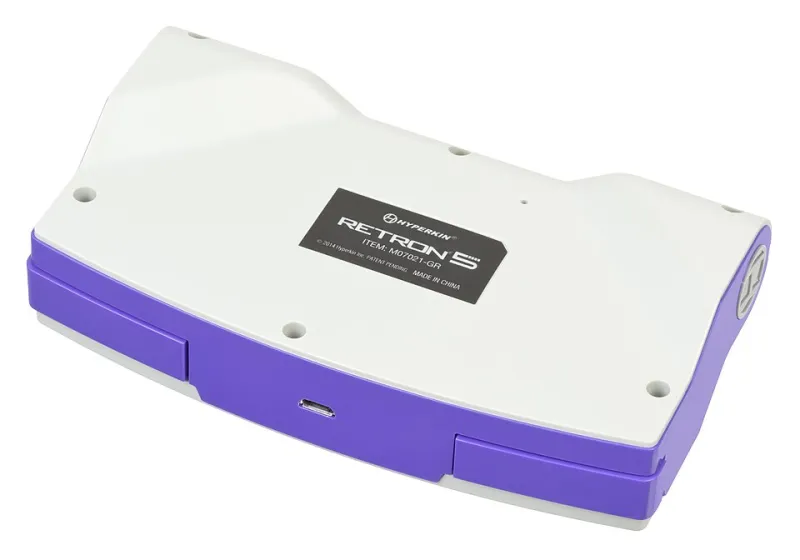
Photo: Evan-Amos, Public domain, via Wikimedia Commons
For decades, the basic shape of a gaming controller was basically settled. Two thumbsticks, a D-pad, a handful of face buttons, some shoulder triggers. Maybe rumble if you were feeling fancy. It was a design language so universal that most gamers stopped thinking about it entirely — which, honestly, was probably the point.
That era is ending. Slowly, then all at once.
Right now, the gaming hardware market is fragmenting in ways that would've seemed niche or even gimmicky just five years ago. Back-button modules, hall-effect thumbsticks, gyro-enabled budget controllers, one-handed adaptive devices, and motion-heavy peripherals built specifically for indie game communities are all finding real audiences. Major manufacturers are paying attention. And the ripple effects on how games actually get designed are only starting to show up.
The Quiet Revolution Behind the Controller
Let's start with the stuff that doesn't look flashy but is genuinely changing how competitive and enthusiast players game: back buttons and remappable inputs.
Sony's DualSense Edge, Microsoft's Xbox Elite Series, and a flood of third-party alternatives from brands like Scuf and Victrix have pushed programmable back paddles into the mainstream conversation. What used to be a mod-community workaround — literally soldering extra inputs onto a standard controller — is now a bullet point on a retail box at Best Buy.
The reason this matters goes beyond convenience. Back buttons let players keep their thumbs on the sticks while executing inputs that would otherwise require awkward hand repositioning. In a fast-paced shooter or a character action game, that can be the difference between landing a combo and fumbling it. Competitive communities noticed first, but casual players are catching on too, especially as content creators show off their custom setups online.
This is the pattern you see over and over in controller evolution: niche communities identify a real problem, build or mod their way to a solution, and eventually the mainstream catches up.
Adaptive Hardware Is Finally Getting Serious
One of the most meaningful shifts happening right now is the growing legitimacy of adaptive controllers — devices designed for players with physical disabilities or limited mobility.
Microsoft's Xbox Adaptive Controller, released back in 2018, was a genuine landmark. It wasn't a perfect product, and it wasn't cheap, but it signaled that a major platform holder was willing to invest in hardware that served players who'd been largely ignored. Since then, the space has grown considerably. Third-party manufacturers are building modular switch arrays, foot pedals, eye-tracking integrations, and single-hand controllers that work with both console and PC ecosystems.
What's interesting — and this is something the broader gaming community doesn't always appreciate — is that adaptive hardware innovations often feed back into mainstream design. The thinking required to make a game playable with unconventional inputs forces developers to confront assumptions baked into their control schemes. That scrutiny tends to produce better, more flexible design overall.
Accessibility and innovation aren't separate conversations. They're the same one.
The Indie Hardware Scene Is Getting Weird (In the Best Way)
If adaptive controllers represent the thoughtful, utilitarian edge of this hardware shift, the indie peripheral scene represents something closer to pure experimentation — and it's genuinely exciting.
Small hardware studios and Kickstarter projects are producing motion controllers, haptic feedback gloves, custom arcade sticks with programmable LED rigs, and bizarre one-off devices built specifically around single games or genres. Some of it is clearly passion-project stuff that'll never scale. But some of it is pointing toward real possibilities.
Gyroscopic aiming, for example, has been a feature in Nintendo's ecosystem for years — the Switch's Joy-Cons support it, and plenty of shooters on that platform use it effectively. But gyro has been slow to catch on with PlayStation and Xbox audiences, partly because of cultural inertia and partly because not all games support it well. Third-party controller makers are now shipping gyro-enabled pads at mid-range price points, essentially betting that the audience is ready to experiment.
Meanwhile, indie game developers are actively designing around unconventional inputs. Games built for specific controller configurations — or games that encourage players to use motion, touch, or even audio inputs alongside traditional buttons — are becoming a small but real subgenre. It's the kind of creative cross-pollination that only happens when the hardware ecosystem loosens up.
What This Fragmentation Means for Game Designers
Here's where things get complicated for the people actually making games.
When there was one dominant input standard, designing control schemes was hard but bounded. You knew what players had in their hands. Now, a developer shipping on PC and console has to think about players using a standard pad, an elite controller with back buttons, a gyro-enabled third-party device, a keyboard and mouse, a fight stick, or some combination of the above — plus accessibility configurations on top of all that.
Some studios are responding by building extremely robust control customization menus. Others are leaning into platform-specific features (the DualSense's haptics and adaptive triggers are a good example of a developer genuinely designing for a specific controller's capabilities rather than just supporting it generically). A few are punting entirely, shipping bare-minimum remapping options and hoping players figure it out.
The studios that are putting in the work tend to produce better experiences across the board. Full remapping, sensitivity tuning, toggle vs. hold options, gyro support — these aren't niche features anymore. They're table stakes for a well-made game in 2024 and beyond.
The Fort's Take
At VG Fort, we've always believed that the best gaming setups are the ones that work for you — not the ones that look the most impressive on a shelf. The controller wars unfolding right now are, at their core, about exactly that: players demanding hardware that fits their hands, their abilities, their playstyles, and their games.
Major manufacturers listening to niche communities isn't charity. It's smart business, because those communities are loud, loyal, and influential. But the side effect is genuinely good for everyone. More options, better accessibility, more creative design thinking — that's a win for the whole ecosystem.
Get ready for controllers to keep getting weirder. Honestly? We're here for it.